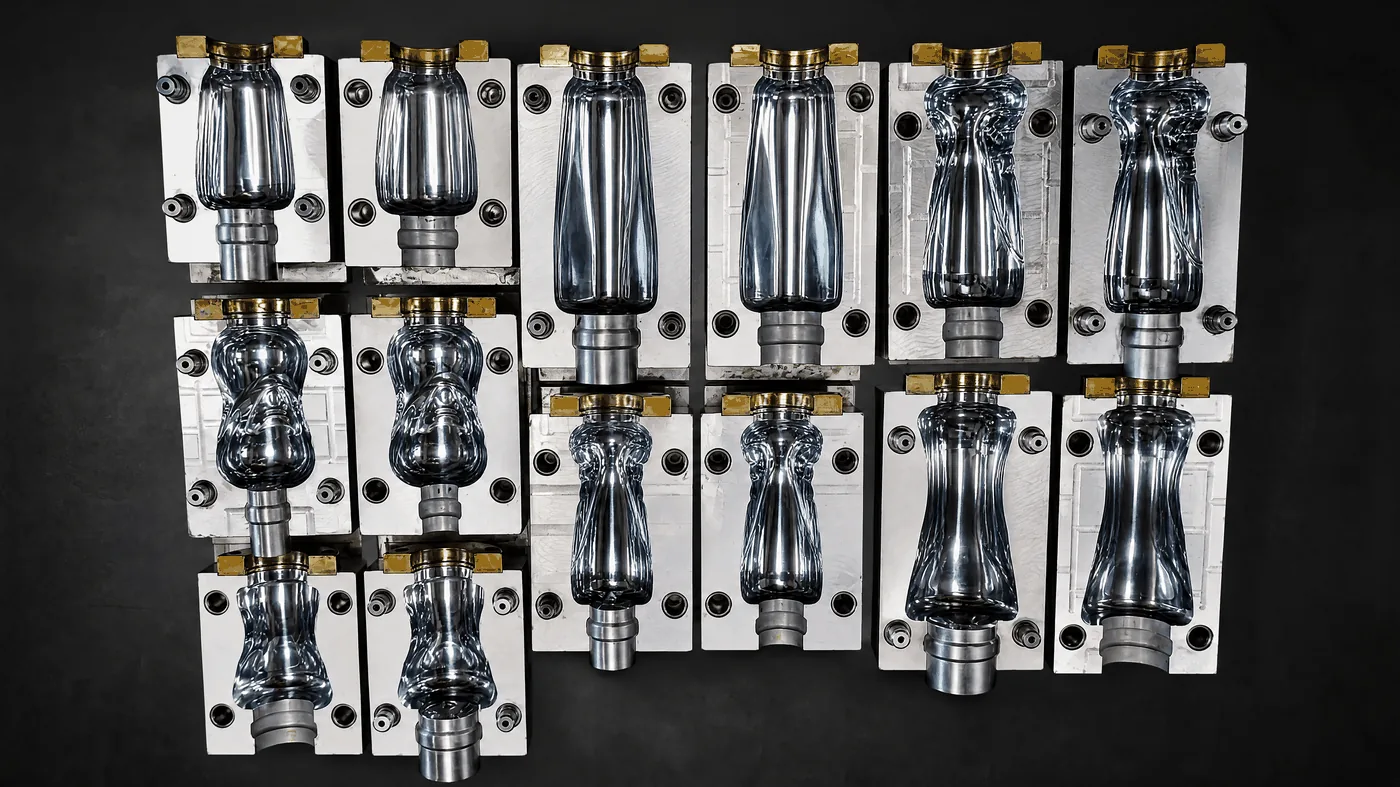
Every year, dozens of Indian bottle manufacturers waste lakhs of rupees on blow moulds that fail within 6 months — because they didn't know what to check before paying. Whether you're buying your first PET bottle mould or replacing a worn-out cavity set, this checklist will protect your investment.
At Ultra Mould, we've manufactured 500+ blow moulds over 10 years. Here is exactly what you should verify — either by asking your supplier directly or by inspecting the mould physically before accepting delivery.
The steel grade determines everything — how long the mould lasts, how well it holds polish, and whether it can withstand your machine's clamping force. For PET moulds in India, ask for:
A supplier who cannot name the steel grade they use — or who says "good quality steel" without specifics — is a red flag. Always ask for the steel grade in writing on the invoice or specification sheet.
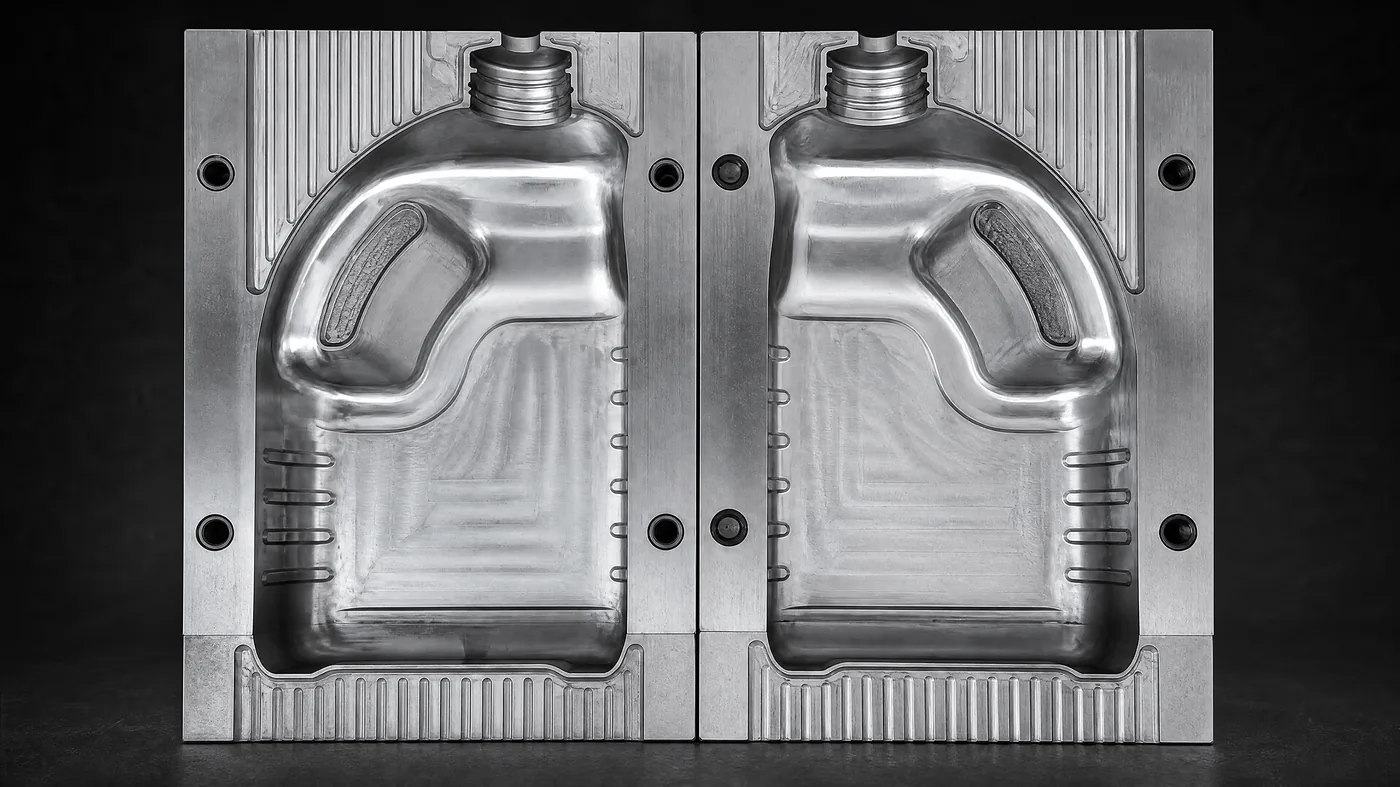
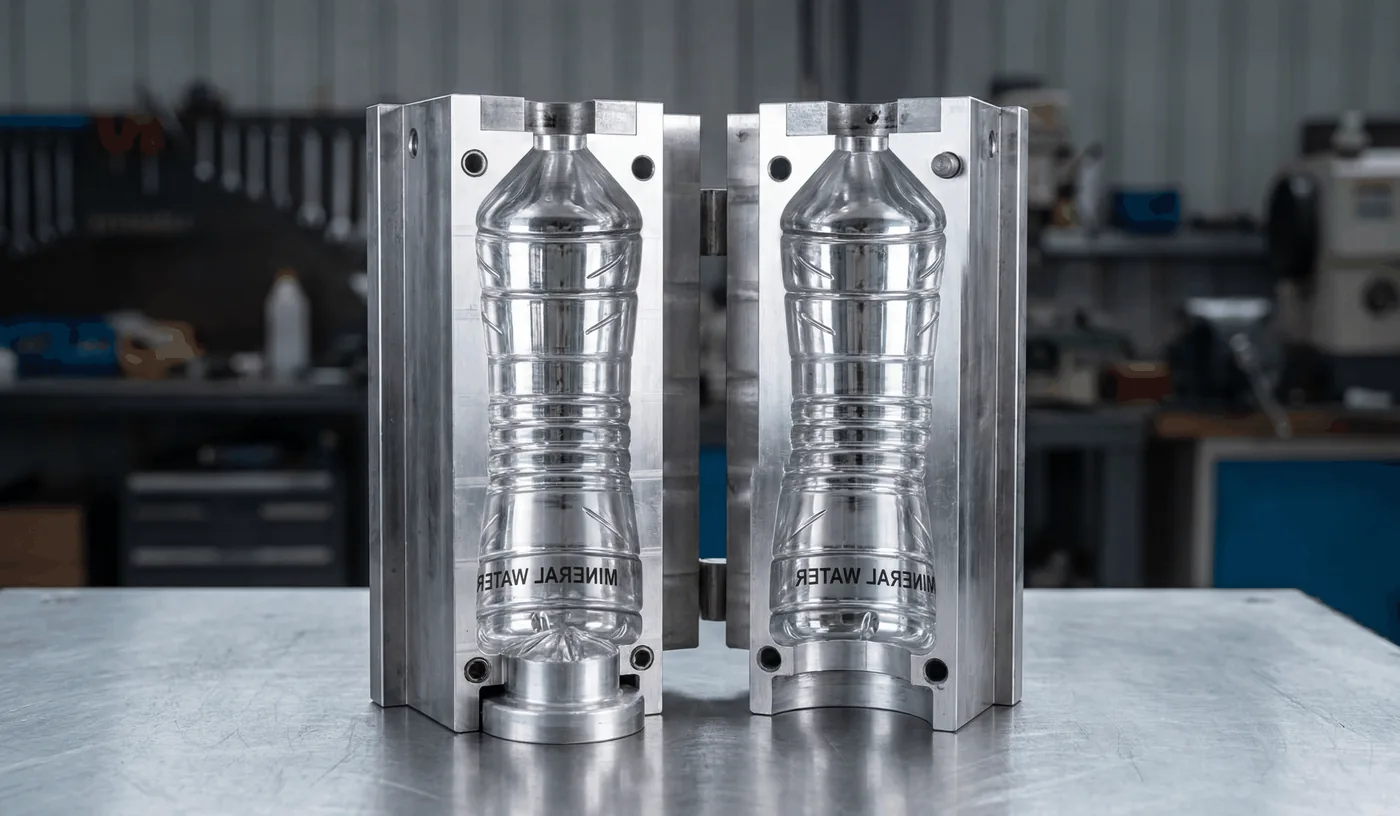
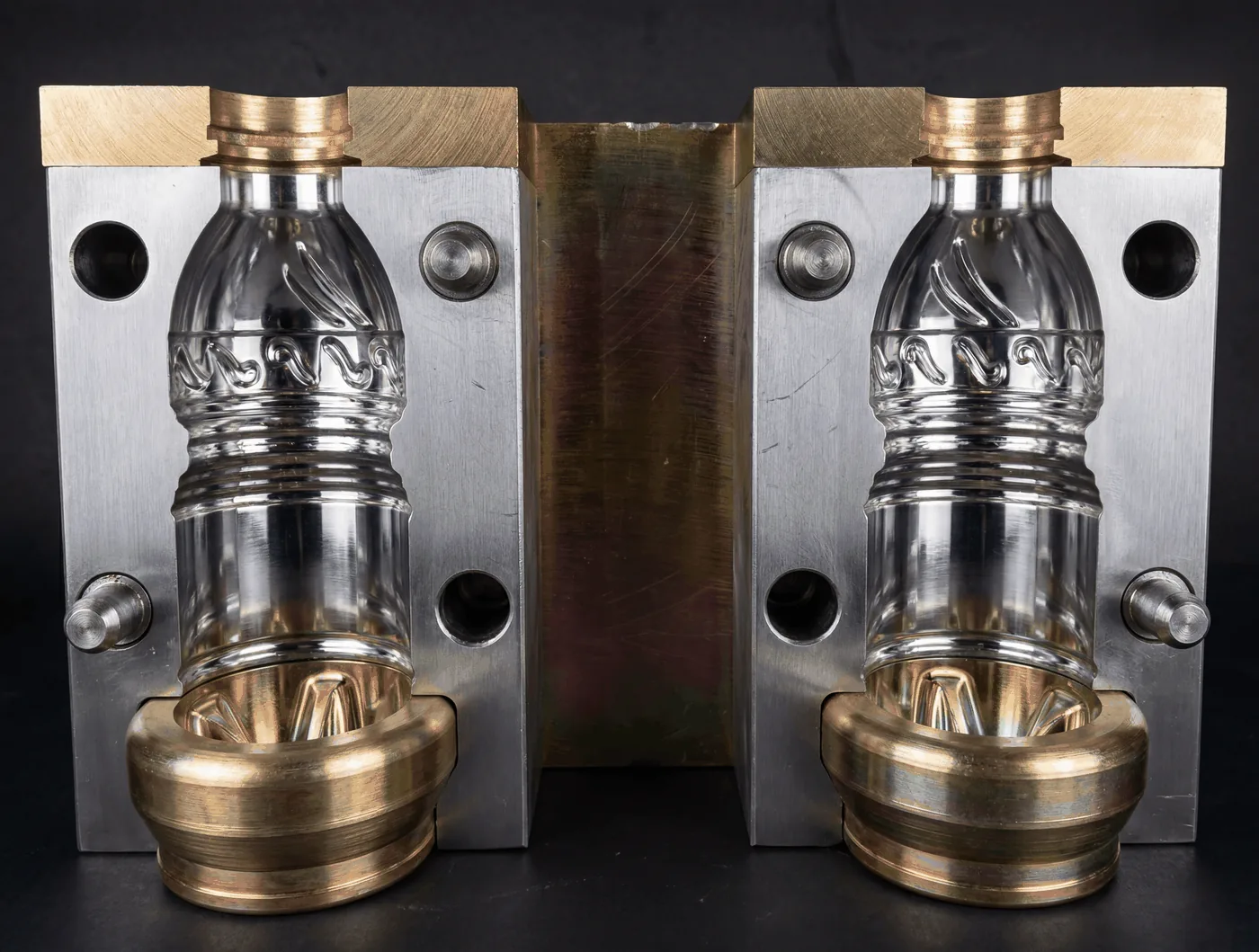
The cavity surface directly determines the surface finish of your bottle. For PET bottles, you need a minimum Ra 0.4 µm mirror polish on all cavity faces. A rough cavity means:
Ask to see the cavity under a bright light before accepting delivery. Any visible machining marks, swirls, or orange-peel texture is a defect. For HDPE moulds, the finish requirement is lower (Ra 0.8–1.6 µm) because HDPE bottles are typically opaque.
The parting line is where the two halves of the mould meet. If the parting line is misaligned, every bottle produced will have a visible flash line — an excess plastic fin running down the side of the bottle. This is a major quality defect for beverage and pharma bottles.
Verify parting line accuracy by:
Poor cooling is the #1 cause of long cycle times. If your mould runs at 8 seconds per cycle but should run at 5, the cooling channel design is often the culprit. Ask your supplier:
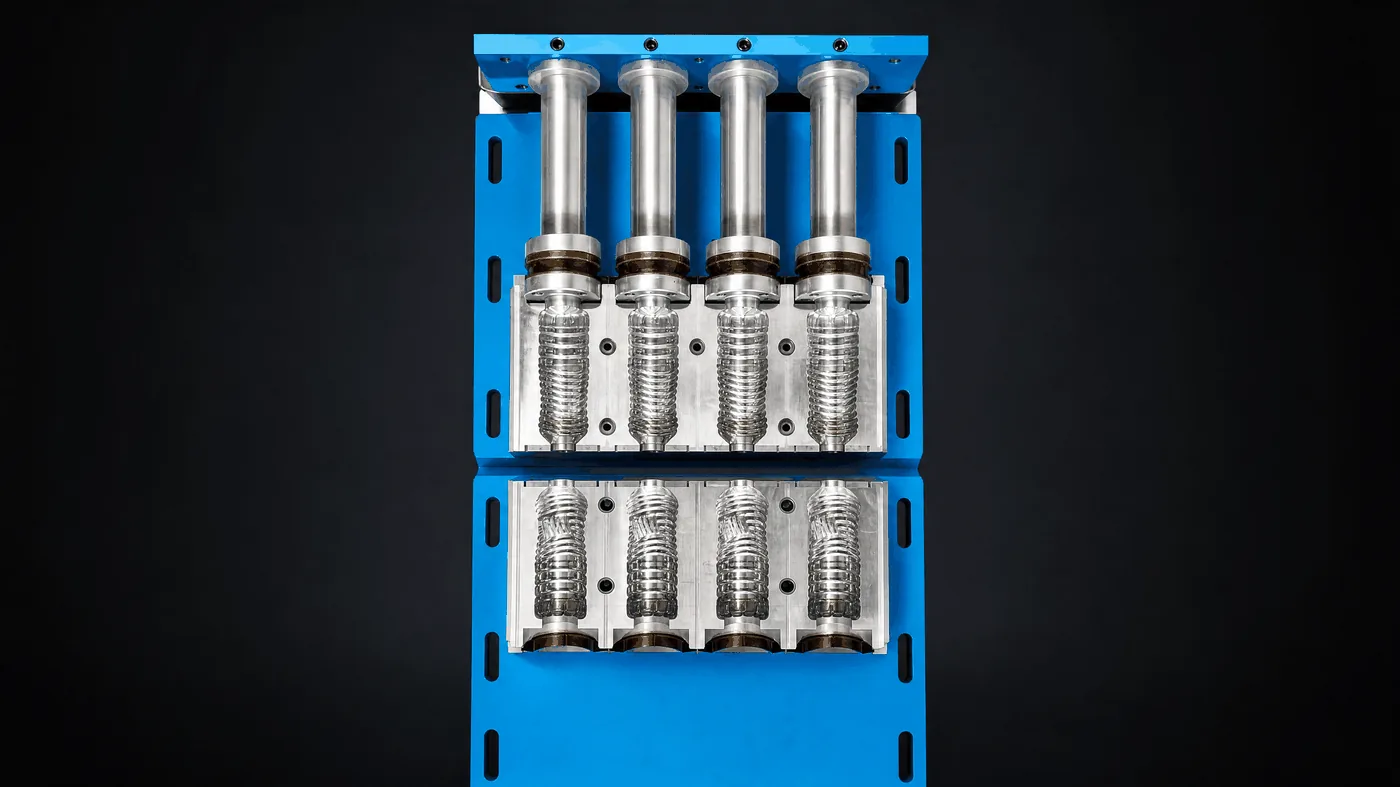
For multi-cavity moulds (2-cavity, 4-cavity, 6-cavity), uneven cooling between cavities leads to dimensional variation from one cavity to the next. Ask for thermal simulation data if you're buying a 4+ cavity mould for a high-speed line.
The neck finish (thread profile, diameter, height) must precisely match your cap. A mismatch of even 0.2 mm causes cap-to-bottle leakage — especially critical for carbonated drinks (CSD) where the bottle is under pressure. Before production begins:
This is where many buyers get burned. A mould dimensioned for a DTPPL machine will not fit on a Gajanand machine without modification — because the blow pin diameter, pitch, and tie bar spacing are different. Before ordering:
At Ultra Mould, we maintain dimensional specifications for every major Indian-made blow moulding machine — DTPPL, Bana Envirotech, Gajanand, Jagmohan, Sadhi/SMP, and others. We verify machine compatibility before production begins.
Never accept a mould without witnessing (or receiving video of) a production trial run. A proper trial should demonstrate:
| Parameter | PET Blow Mould | HDPE Blow Mould |
|---|---|---|
| Steel grade | EN31 / P20 | EN8 / EN31 |
| Cavity finish | Ra ≤ 0.4 µm (mirror) | Ra ≤ 1.6 µm |
| Parting line tolerance | ±0.05 mm | ±0.1 mm |
| Cooling channel proximity | 8–12 mm from cavity wall | 10–15 mm |
| Expected mould life | 500,000–1,000,000+ cycles | 300,000–800,000 cycles |
Ultra Mould has been manufacturing precision PET and HDPE blow moulds for 10+ years, serving clients across India and 20+ countries. We offer a 24-hour quote turnaround and 4–6 week delivery.
→ Contact us for a free quote | WhatsApp: +91 63529 44710 | info@ultramould.com
Related: PET Blow Mould Manufacturer India · HDPE Blow Mould Manufacturer India · Blow Mould Manufacturer Gujarat · Mould Repair Service